advice from a fake consultant

out-of-the-box thinking about economics, politics, and more... 

Thursday, March 26, 2009

On Winning The Mexican Drug War, Or, "Fighting For Peace Is Like..."

The AIG Bonus Scandal having been disposed of for the moment, Congress is all a-flitter, all of a sudden, about the new “Greatest Threat To The American Way Of Life In All Of World History Of The Week”...and this week the threat is The Mexican Drug War.

The Mexican Drug Cartels, Senator Joe Lieberman told us in a March 25th hearing, are the number one organized crime threat we face in America today.

The violence, we are told, is beginning to affect America’s National Security...and unless I’m mistaken, Congress is looking to spin up for some sort of action that might range from sending thousands of troops to the US Southwest—and beyond—to going after users in the US “by any means necessary” to perhaps even getting all “Jack Bauer” on some Mexicans who would, presumably, have some useful information.

Although no one’s discussed it yet, we will probably hear someone even propose sending cartel leaders to Guantanamo (Michelle Bachman...I’m thinking of you...).

However, there is another way to disarm these dangerous cartels...and history tells us it works.

So Congress, before you go passing some “warrantless wiretapping for drugs” 4th Amendment exception, allow me to suggest that instead of a drug war, what we really need...is a drug peace.

I certainly do not drink all the time.
I have to sleep you know.

--W.C. Fields


If you really want to understand today’s War On Drugs from the mind of a Mexican Drug Cartel “senior manager”, imagine the America of about 1929.

Alcohol was only available from you and your friends—or it was available from your enemies, who you were trying to kill with all the ingenuity you could muster.

Your enemies were, of course, also trying to kill you; so every day at work you needed to be looking over your shoulder...and to be willing to shoot first and ask questions later.

The police, the Courts, and the various elected officials were, at worst, a “business expense”.

Corporate America had embraced the concept of “vertical integration”; and in Detroit Henry Ford’s River Rouge Complex combined all of the elements of car manufacture, all in one place: a steel mill, a glass factory, a tire plant...and all of it ending in an assembly line.

Criminal America had seen the same light, which was why The Purple Gang, also based in Detroit, was engaged in liquor smuggling, liquor distribution (they were reported to be Al Capone’s largest supplier), and, naturally, the extortion of money from the speakeasies—not to mention robbing or kidnapping the occasional high-roller speakeasy customer.

The Purple Gang even allied themselves with the Sugar House Gang to ensure vertical integration was more efficient. Because of Prohibition, the availability of products used to make alcohol was suddenly restricted; meaning whoever controlled the distribution of corn sugar controlled who would be manufacturing liquor.

The Sugar House Gang (named after the product they controlled and the place they sold it) would tell The Purple Gang who had been buying corn syrup. Once the customer had distilled the liquor, The Purple Gang would rob them...and then sell the goods to Capone, or another customer...and then vertical integration was complete!

The Purple Gang was so tied in to the bootlegger-on-bootlegger violence of the era that they even have a tangential connection with the Valentine’s Day Massacre; which seems to have been related to a dispute among rival liquor distributors “Bugs” Moran and Al Capone (who, as everyone knows, was in Florida at the time...so he couldn’t possibly have anything to do with it).

It was estimated The Purple Gang might have been responsible for as many as 500 murders before they were targeted by Federal officials.

Murders, kidnapping, bootlegging, extortion, public corruption, rotgut liquor that could cause blindness--or even death--the invention of the “drive-by” shooting...all of it was part and parcel of daily life in 1920s Prohibition America.

In fact, Prohibition had created “drug cartels” so dangerous to National Security that President Herbert Hoover had named Al Capone “Public Enemy Number One”.

(Of course, some might argue that Hoover’s real Public Enemy Number One was the Great Depression...but we’ll address that question another day.)

Under great public pressure, Prohibition ended in 1933, having lasted roughly 14 years.

This discussion began with an examination of the question of how you might reduce the power of the Mexican Drug Cartels, you’ll recall; so let’s end this conversation by posing some questions that tie the whole thing together:

--When’s the last time you heard of three carfuls of guys from Jack Daniels using their Tommy guns to first shoot up, and then burn, Jim Beam’s distillery so that they could take over their turf?

--Mexican Drug Cartels make billions of dollars annually importing virtually every drug you might want: they import the reefer, I’m told, and the cocaine, the heroin, the meth, the ecstasy...and probably Viagra, to boot.

You know what the one drug is that Mexican Drug Cartels don’t import?

Tequila.

--So if liquor has become a legal business...and Jack Daniel’s sees no business imperative in a raid on Jim Beam...and Mexican Drug Cartels aren’t making money smuggling tequila (at least not since the 1930s, anyway)...and the last drive-by shooting that involved the liquor business was sometime in 1932 or early 1933...and every single “Mafia Liquor Cartel” was basically out of business the moment Prohibition ended...you think maybe it’s time that we thought about making some of the other drugs a legal business, too?

I’m pretty sure I know who won’t like the idea...and I’m pretty sure it’s going to be the suddenly much less powerful Mexican Drug Cartels.

Wednesday, March 25, 2009

On Catching Up, Or, Good News Told, And The Bush Book Reviewed

So many times when we get together you have to put up with me complaining about something...and there are lots of other times when it’s me warning about events that are looming in our future.

Even though they’re conversations we need to have, they’re often not very emotionally satisfying.

Today we depart from that pattern, in a very good way.

It’s “follow-up day”; and the conversation takes us to three “happy places”: two “problem” stories that have recent positive progress to report—and, just because I care about you, Gentle Reader, an exclusive preview of the George W. Bush autobiography, obtained with considerable effort from an unnamed and particularly well-placed source.

There’s a lot to cover, so let’s jump right in and tell you what you need to know.


“Why don’t you like girls?”
“They’re too biased.”
“Biased?”
“Yeah...bias this and bias that—until I’m busted.”

--Joke 5997, “10,000 Jokes, Toasts, & Stories”, Lewis and Faye Copeland


In June of 2007 we ran the first of a series of stories describing how some school kids who had parents that owed money to the school—in one case, $7.50--were being served “alternate meals”...which meant that if Mom or Dad forget to send the money, the kid gets a cheese sandwich, while everyone else gets the regular hot meal...which meant that, in some cases, the hot meals were literally taken from the hands of children at the cash register...after which the kids are sent to classrooms where we spend about half a billion tax dollars annually to try to teach them healthy life habits—like not using food as a weapon.

We became aware of all of this because parents in Chula Vista, California decided to take on the local Elementary School District; who felt that implementing this policy in the District made so much financial sense that it outweighed the potential harm to the affected students.

Well, lots of parents didn't like it...and sometimes parents win.

A partial victory was achieved in February of 2008, when the parents (led by Will and Cyndi Perno, and Alice Coronado) were able to influence first the California Food Policy Advocates...and then, even more importantly, Fabian Nuñez, the former Speaker of the California State Assembly.

Pressure was applied...resulting in this:

“Irrespective of a student’s financial ability to pay for a meal, the laws cited above require that all students eligible for free and reduced-price meals receive a reimbursable meal during each school day. The reimbursable meal shall be the same meal choice offered to students who do not qualify for free or reduced-price meals [EC 49557(c)]. Therefore, school districts/county offices of education (COEs) cannot serve an alternate meal to a student eligible for a free or reduced-price meal who does not have the ability to pay or provide a medium of exchange for his/her meal on a given day.

School districts/COEs need to formulate a plan to ensure that children eligible to receive free or reduced-price meals are not treated differently from other children with respect to meal service.”

--From the “Nutrition Services Division Management Bulletin”, California Department of Education, February 2008 (emphasis is from the original document).


It took another year of pressure, but Will Perno sent an email to let me know that the new policy the Chula Vista Elementary School District adopted just this month ends the practice of serving these lunches altogether:

“...Our research has shown that the alternate meal program is no longer an effective intervention tool for managing unpaid balances. Thus, we are eliminating the alternative meal.”

--Letter to parents, March 2, 2009, from Superintendent Lowell J. Billings


(Victory in California is not, however, victory nationwide...and just last month Albuquerque Public Schools started a “cheese sandwich policy” of their own—which is already causing trouble.

Does your District have this sort of policy?
Take a few minutes this week and find out...)

New Butler: “At what time, Sir, would you wish to dine as a rule?”
Profiteer: “What time do the best people dine?”
New Butler: “At different times, Sir.”
Profiteer: “Very well. Then, I, too, will dine at different times.”

--Joke 6767, “10,000 Jokes, Toasts, & Stories”, Lewis and Faye Copeland


Regular readers are likely to have also noticed a series of four stories in this space on aspects of Egyptian politics.

We have discussed the fact that opposing the ruling National Democratic Party, represented by President Hosni Mubarak, can be construed as unconstitutional—and criminal to boot—and we described how running against Mr. Mubarak for President of Egypt in 2005 was the reason Ayman Nour of the El-Ghad Party had been spending the past several years in prison.

The imprisonment of Nour had not marked the end of violent State harassment against the El-Ghad party...so it was quite a surprise to hear that Ayman Nour had been unexpectedly released about four weeks ago.

Wa’el Nawara, who leads El-Ghad today, sent me these comments regarding Nour’s release:

“Ayman Nour was released today around 6pm where he just walked into his home at Zamalek, Cairo, unexpectedly. A media frenzy broke out and in a few minutes, his home was packed with reporters from local and international news agencies.

His release came as a result from the Egyptian Attorney General, on medical grounds! Nour was first arrested on 29th January 2005, 90 days after El Ghad Party was given legal status in October 2004. Ayman Nour was first released on 12th March 2005 and he ran against Mubarak in Egypt's first multi-candidate presidential election Egypt witnessed where he came first runner up after Mubarak.

Nour was then re-arrested on 5th December 2005 - merely 90 days (again) after his participation in Presidential Elections, sentenced to 5 years in Jail on 25th December 2005. Appeal was turned down in May 2006.

Upon his release 2 days ago, Ayman Nour announced that he seeks no revenge, that he is calmer and more patient than ever and that he will focus his efforts to rebuild El Ghad party to advance the cause of reform, liberty and democracy in Egypt.

We hope that this may be the start of a new era in Egypt's political scene, where a new social contract can be drafted through a package of comprehensive reform...

...We shall strive to create a national dialogue with opposition leaders to reach some consensus on an Agenda of Reform. We have no reservations to even engage reformist wing from NDP in such an agenda. But we need to agree that the outcome of such dialogue must be some sort of a meaningful political process built on the principles of pluralism, real democracy and freedom.”


(It has been hazardous to be a blogger in Egypt as well, and the recent release of Mohamed Adel, combined with the news of Nour’s release, means we need to take a fifth look at the view from Egypt. Stay tuned.)

And finally...we review the preview chapters of the George W. Bush autobiography.

To give you an idea of what the book is about, a few words from the Random House press release:

“Tentatively titled “Decision Points,” the book will not be a conventional memoir, but instead will focus exclusively on approximately a dozen of the most interesting and important decisions in the former President’s personal and political life. Mr. Bush will write candidly about, among other topics, his decision to run for the presidency; how he chose his closest advisors, including Dick Cheney, Karl Rove, and Condoleezza Rice; the terrorist attacks of 9/11; the decisions to send American troops to Afghanistan and Iraq; the response to Hurricane Katrina; his commitment to fight AIDS around the world; the formation of his stem cell research policy; his relationships with his father, mother, siblings, and wife; his decision to quit drinking; and how he found faith. The former President will write the book himself, with the assistance of researchers, and has already commenced the writing process.

“My goal is to bring the reader inside the Oval Office for the most consequential moments of my personal and political life. I look forward to painting a vivid picture of the information I had, the principles I followed, and the decisions I made. I am spending time on the book every day, and I am thrilled to be working with the team at Crown,” said the former President.”


As I said, I’ve seen some of the advance pages of the book, and here are a few impressions:

--We are fortunate that this book was written after 1998, because before then it would not have been possible to really do the subject justice.

Of course, that was the year 24 new colors were added to the Crayola palette...and as far as I’m concerned, Jungle Green, which is what I would have used in the past to color in Dubya’s flight suit on the “Iraq and Afghanistan” page, is just not as authentic as Mountain Meadow Green.

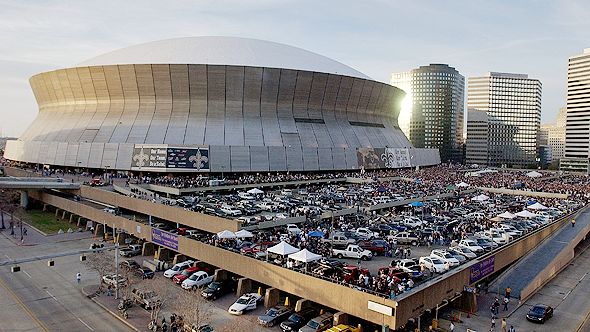
The same was true on the “Katrina” page. To simulate the color of the water coming into New Orleans from the Gulf of Mexico I combined Caribbean Green and Fuzzy Wuzzy Brown...and mixing Macaroni and Cheese and Olive Green captures the exterior of the Superdome so, so, nicely.

None of this would have been possible without those 24 extra colors...and as so often happens, better tools make the telling of history ever more engaging and accurate—enriching our understanding of events in the process.

--I was worried that I would have trouble sharpening my crayon enough to make “Bin Laden Determined To Attack Inside The U.S.” legible...but lucky for me, that page was missing from the preview copy.

--What I’ve seen of the book prompts a quick—and admittedly snarky--question: when Mr. Bush says that he’ll be “working with the assistance of researchers”...isn’t that kind of like OJ Simpson telling reporters that he’s busy “looking for the real killers?”

(I was disappointed, I must admit, that the advance copy did not include the “Orange Jumpsuit” page, either: choosing between Atomic Tangerine, Burnt Orange, Neon Carrot, and Mango Tango had taken nearly an hour and two replays of a Ted Nugent song...and with the page missing all that time was expended, with no tangible result produced.

I had also picked out Burnt Orange, by the way, for the fiber optic cables in the AT&T network switching center in San Francisco, but, again, the regret of a missing page...)

So there we are: for today we have three great stories...and two of them don’t even require you to stay within the lines, which is always nice.

Ayman Nour is out of jail, which may be part of a bigger story, school lunches are no longer punishment in California...and we had a spot of fun with Mr. Bush and his impending book, for which I hope Laura Bush will forgive us.

And as for me?
Time to get online and see if I can order another Macaroni And Cheese to replace the one I used up on the Superdome.

Ah, the troubles of a writer...

Monday, March 16, 2009

On Ruling The Arctic Frontier, Part Two, Or, There's Stormier Weather Ahead

In order to complete today’s story we return to travelling the seas around the High Arctic...and in telling the first half of the story we were introduced to a sea captain and his parrot, we examined the destruction of a tribal village by United States Marines—and we learned that “tricing up” someone is not some kind of weird dating ritual.

The story has already raised questions of race and culture; and as we move forward it’s going to encompass whaling, an incredible rescue, and more personal trials and tribulations—not to mention the Brewery Worker’s Union—and if all that wasn’t enough, we’ll even bring in a few thousand reindeer to round the whole thing out.

So put on your caribou fur, clean up your sled runners--and let’s head north to Alaska, before the rush is on.

Those of you who were with us last time will recall that we are telling an epic tale of 19th Century Alaska...and for those of you who were not, let’s bring you up to date:

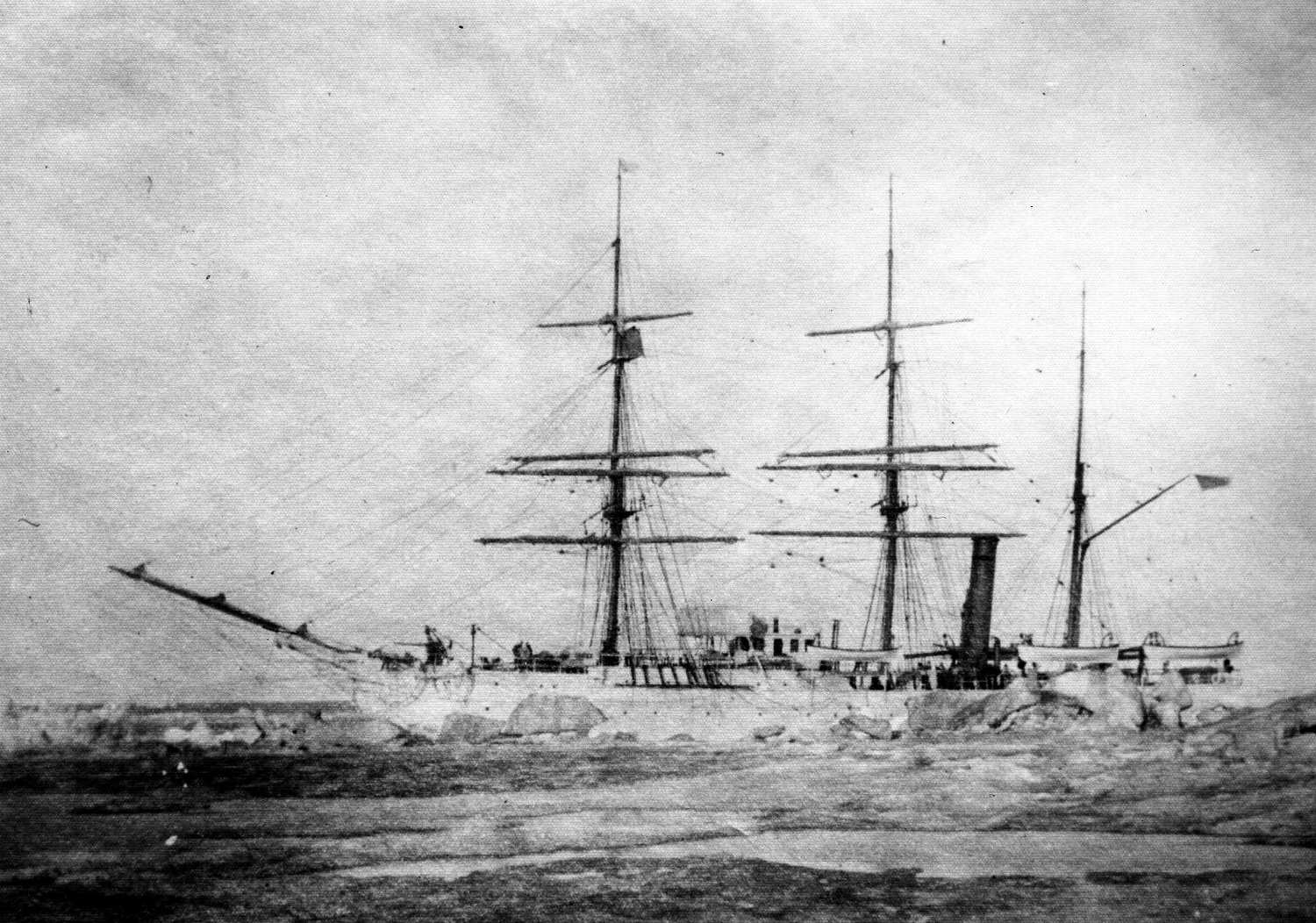
Captain Mike “Hell-Roaring” Healy, possibly the most influential man in the Arctic at the time, had risen from a Georgia plantation birth to become the commander of the most important ship in the Arctic, the Revenue Cutter Bear.

From his Aleutian base at Unalaska, his influence ran from Anchorage to Point Barrow—and even to Siberia...and within that “sphere of influence”, his word was absolutely the way it would be.

In many ways he was the United States in Alaska: his was the only (white man’s) law in a lawless Territory, he carried the mail, and he and his ship were often the first responder in emergencies.

There had been controversy, however—and when Part One of this story ended Captain Healy had just survived an investigation into his methods—and his alleged heavy drinking--while in command.

And with the catching up out of the way, let’s talk reindeer.

Despite what you might think after hearing about Captain Healy’s involvement in the destruction of that tribal village in Part One of our story, he was regarded as a man who cared deeply about life in the tribal communities.

And when American officials worried about those communities, the biggest fear was starvation.

For those not aware, most of the time, most of the interior of Alaska is geographically inaccessible, and to make things worse, what little growing season there might be is too short to allow for any real agricultural production.

That means much of what Alaska natives were eating was gathered from the sea...and since the foreign ships had come to the Arctic, those resources were getting a lot more scarce. (Much of the rest of the local diet was caribou, which is a migratory animal, which means the presence or absence of fresh meat would depend on the location of the herd.)

In the late 1800s, when the whalers had moved from the Pacific to the Arctic as the whale catches began to decline farther south, the walrus and sea lions that were quite abundant in the far north became a natural choice for harvest. At the same time, hunters had begun to work the region with rifles, which was forcing the caribou herds farther inland.

The obvious downside to this new activity was that it was becoming harder and harder for native subsistence hunters to gather enough food for their communities as these animal populations began to decline...which was something the two men who had been sent to Wales, Alaska on the Bear to establish a school had quickly noticed.

(There are those who question whether the new hunting was as serious an issue for the natives as the new educators thought it was; suggesting instead that natural forces were causing the declines in population.)

It was also well known that just a few miles across the Bering Strait, in Siberia, natives were practicing “reindeer capitalism” (the reindeer eat the omnipresent lichen, making them the perfect animal for herding in an Arctic environment).

In 1891, on board the Bear, those two men, their boss (Dr. Sheldon Jackson) and Captain Healy came up with the idea of importing Siberian reindeer to Alaska so that Alaskan natives might have a go at reindeer herding themselves. By the next year, with no official permission from Washington, they brought over the first 16 reindeer.

(It should also be noted that in addition to reducing perceived starvation, the other purpose of encouraging the local population to herd reindeer was to “civilize” the natives through assimilation with the newly arrived Americans; and developing an interest in capitalism was felt to be an effective way to advance that goal.)

By 1900 there were more than 3300 reindeer in Alaska.

The potential future? Sheldon Jackson himself wrote in 1895 that the 400,000 square miles of Alaska’s interior could support 9.2 million head of reindeer, which could employ as many as 287,500 herders.

The actual outcome? More or less 125,000 deer were processed, either for food or clothing, from the 1890s to the 1920s; and more or less 10% of those were owned by the Lomen family of Nome, Alaska.

In the 1930s, the herd grew to 650,000, but declined to as few as 25,000 in the 1950s. A renewed interest in herding began in the 1960s, and to this day there is an active reindeer industry in the State.

At the same time Healy was sailing reindeer around the Bering Sea, he was sailing himself into further trouble back home.

A variety of interest groups had been banding together to express their displeasure with Healy’s ways...including, oddly enough, the San Francisco branches of both the Brewery Worker’s Union and the Women’s Christian Temperance Union; and the problem had been building since the investigation of Healy in 1890 had cleared him of all charges.

When Healy had been accused of cruelty in that investigation, his response had been to say:

“We are empowered by Congress to suppress mutinies. We have no right to exercise magisterial functions. Our functions as such are exercised by policemen. We must suppress mutinies. A policeman does not sit in judgment on a man before he acts. We are not allowed to hold trials . . . If a mutiny occurred at San Francisco, to quell a mutiny or disturbance we would go and arrest the man, and turn him over to the police. But, up there, where there is no jail to bring men to, that is the last resort, to trice men up.”


And the Investigating Board, in that action, had supported him. But times were changing, and in 1895 25 officers of the various Bering Sea cutters jointly signed a new statement of charges against Healy.

The crux of the matter again revolved around his behavior while drinking; among the charges were accusations that he discovered a burial at sea occurring on board his ship without his knowledge—and that he made his entrance to the somber occasion by announcing that “Aboard this ship I am the resurrection and the life.’’

In another incident Healy was accused of literally being “falling-down drunk” on duty: it was alleged that he stumbled right off the dock at Unalaska and into the water at an official social event.

This and the other alleged incidents were investigated back in Washington, DC—and this time, the Investigating Board found him guilty of various forms of bad conduct, “Tyrannous and abusive conduct to inferiors”, and “Placing a vessel in a perilous position while in an intoxicated condition, thereby endangering the lives and property under his command.”

It was recommended that he be dismissed from the Revenue Cutter Service, but the man who had the final word on the matter, Treasury Secretary John G. Carlisle, gave this order instead:

“That Captain Michael A. Healy be dropped to the foot of the list of Captains of the Revenue Service, and that he retain that place hereafter; that he be suspended from rank and command and kept on waiting orders for a term of four years. and that he be publicly reprimanded by reading this order on board all vessels of the Revenue Cutter Service, by the commanding officer of each, at a muster of the commissioned officers, and admonished that if again found guilty of the excessive use of intoxicants during the term of this sentence or thereafter, whether afloat or on shore, he will be summarily dismissed the Service.”


Just as Healy had changed the way the Service operated in Arctic regions in years past, his conviction changed the way the Service operated from that day forward. The excessive use of alcohol was now seen as an offense that demanded serious punishment; and beyond that, the very types of punishment that were allowed had themselves changed as a result of the Healy case.

In a sense, it was almost the end of the “Wild West”—in San Francisco and in Alaska—and as frontier times came to an end so did the tolerance for frontier justice.

At this point, we interrupt the tale of Captain Healy to tell a quick story about the Bear. In 1897 eight whaling ships, with 265 crew aboard, were trapped in winter ice in and around Point Barrow...and the great concern was that they would starve if no relief effort could be effectively mounted.

In November of 1897 the Bear was called upon to take up the task (despite the late date), departing from Port Townsend, Washington, and making its way to Cape Vancouver, Alaska under the command of Captain Francis Tuttle. (There had been an effort to bring Healy out of suspension for the mission, but that was not to be.)

Because of the pack ice, the ship could go no farther north, so the Captain ordered a small party to set out overland roughly 1500 miles, hugging the coast, in order to get rescue supplies to Point Barrow. Remember the reindeer? Along the way, the Overland Expedition was able to locate and purchase from local herders almost 400 head, which were used to pull sleds with supplies...and which would eventually be used for food.

It was now December 15th—which, in Alaska, means nearly 24 hours of darkness, temperatures that can easily plummet below minus 50 degrees F. (-45 C.), and an exceptionally difficult landscape...with no possibility of communications between the ship, the shore party, or those hoping to be rescued.

There were other hazards as well, as reported by Lt. E.P. Bertholf, of the shore party:

“My interpreter, a half-breed Russian, had been listening to the conversation among the natives, and he informed me he drew from their talk that they realized I was unable to obtain other means of transportation in that out-of-the-way place, and thought it was a good time to force me to increase their pay, thus showing a marked similarity to the actions of some of their more enlightened white brethren in civilization. But there was no help for it, as I was obliged to have their teams, so I was forced to listen to their demands.”


The shore party travelled along the coast for about 100 days, finally reaching Point Barrow on March 26, 1898. The Bear reached the same point July 28 of that year, and by August the crews (having suffered no fatalities) were on their way out of the Chukchi Sea and heading south.


At the end of his suspension in 1900 Healy returned to command aboard the Revenue Cutter McCulloch, which had fought in the Battle of Manila Bay—but a series of personal tragedies fell upon him, including the order to turn over command of the ship, leave the Arctic, and assume command of the Revenue Cutter Seminole, out of Boston. In the course of returning to Seattle in July of that year he apparently experienced a psychotic episode that caused junior officers aboard the ship to physically restrain him in his cabin. It is reported that at one point he attempted to cut his wrists with the crystal of his own watch.

Healy was treated at Port Townsend...and, amazingly, in 1902 his case was reviewed; and as a result of that review he was returned to command aboard the Revenue Cutter Thetis. He was able to complete cruises to Alaska in 1902 and 1903, after which he finally retired. He died in San Francisco, August 30, 1904, of a heart attack.

(A few words on the death of the Bear are in order at this point. The ship, as we mentioned, survived to be the flagship of Admiral Byrd’s Antarctic expeditions in the 1930s—and astonishingly enough, it even served in World War II on patrol in Greenland waters. In 1962, it had been renovated to become a restaurant and museum in Philadelphia, but it sank in waters off Boston as it was being towed there...proving that even a ship would “rather be here than in Philadelphia”.)

Way back at the beginning of Part One I promised you a surprise ending that would make this story of Arctic history relevant to today’s times...so here it is:

Captain Mike Healy was born a slave.

His father, an Irish immigrant, had chosen to live with a woman who had been born a slave, and under the Georgia law in force at the time, not only would Mike and all her other children automatically be classified as slaves, their father was prohibited from freeing them.

That’s why they were sent to Boston for their education.

It is reported that the 10 children had varying skin tones, which meant James, who was darker, could not “pass” as white...but Mike could—and apparently he successfully did.

He is today regarded as the first black commanding officer of a United States ship—although there are some who might consider a discussion of the “one-drop rule” to be appropriate before offering the good Captain that distinction.

I promised to answer one other question as well: how did this story never become a movie?

Dr. John Murphy provides that answer in his “Portrait of Captain Michael A. Healy”:

“In the late 1930s representatives of the film industry, planning to make a film on the life of the noted captain, wired to Healy’s daughter-in-law their wish to examine his four-volume diary. When they arrived it was in ashes. Apparently the daughter-in-law, reading the diary for the first time, learned that her husband’s grandmother had been a slave.”


So that’s the epic tale: born a slave in Georgia, but also born to the Arctic, Captain Mike Healy saved lives, changed the Revenue Cutter Service’s way of doing business—twice—and remains a controversial figure to this day, even as the ships that represent his name and his most famous command continue to ply the seas.

And now, as Paul Harvey would have said: you know the rest...of the story.

Friday, March 6, 2009

On Ruling The Arctic Frontier, Or, Polly Want A Reindeer?

We have an epic tale of history to tell today, and it has everything you’d want in your standard-issue epic tale: the vast expanse of ocean, exploration on the shores of an unknown land, questions of race and slavery and opportunity and torture…and in the center of it all, a real larger-than-life sea captain (and his parrot) who some say was more powerful in Alaska than the Territorial Governor and Circuit Judges who were his frequent shipboard guests.

Such was his influence on the Revenue Cutter Service (later to become the United States Coast Guard) that two Coast Guard Cutters operating today are named with him in mind: the USCGC Bear, named after the most famous ship our sea captain commanded, and the USCGC Healy, the newest icebreaker in the Coast Guard’s fleet.

And with that, Gentle Reader, allow me to introduce you to Captain Mike “Hell-Roaring” Healy—and the Arctic which was his domain.

"Captain Mike Healy is a good deal more distinguished person in the waters of the far Northwest than any president of the United States or any potentate of Europe has become. He stands for law and order in many thousand square miles of land and water, and if you should ask in the Arctic Sea, “Who is the greatest man in America?” the instant answer would be, “Why, Mike Healy.” When an innocent citizen of the Atlantic coast once asked on the Pacific who Mike Healy was, the answer came, “Why, he’s the United States. He holds in these parts a power of attorney for the whole country.”

--“The New York Sun”, January 28, 1894


Mike Healy, oddly enough, was born on a Georgia plantation in 1839. His father sent him (and his nine brothers and sisters, as they came to age) to Boston for their educations. Fate found them among the very first enrollees of Holy Cross College. Several of his brothers and sisters became notable persons in America’s Catholic history (one became a Bishop, one a Rector, three sisters became nuns, and his brother Patrick became President of Georgetown University during the 1870s and early 1880s), but such a path was not to be Mike’s.

He ran away from several academic placements in the United States and in Europe, eventually finding himself (at age 15) serving as a cabin boy on the clipper Jumna out of London (which he reports his parents helped to arrange, although this is disputed). In less than 10 years he had risen through the ranks to “…have been three times second officer and once first officer of a brig…", as he wrote in his 1863 application for a commission in the Revenue Cutter Service. Two of his brothers were now in a position to offer influential assistance, and by January 1865 he found himself a Third Lieutenant of the Service.

By 1868 he had been dispatched to his first Alaska assignment, and by 1877 he was in command of his first ship, the Revenue Cutter Chandler. In 1880 he began one of the first of the two most significant commands of his career aboard the Revenue Cutter Thomas Corwin.

At this point we need to step back and talk about exactly what it meant to be in command of a revenue cutter in late 19th Century Alaska…and to do that, we need to start with a bit of geography.

The Aleutian Islands form an arc roughly 1500 miles long from roughly Anchorage to roughly Vladivostok, separating the Pacific Ocean from the Bering Sea. North of that is the site of the “land bridge” that once connected North America and Asia (near what is Wales, Alaska today), and north of that are the Chukchi and Beaufort Seas. Unalaska is a city located about halfway down the Aleutian chain, and Point Barrow is the northernmost point in the United States.

Within that space the revenue cutter commanders were the most visible official symbols of the United States. They were responsible for preventing smuggling, enforcing the laws among the whaling and sealing fleets and against liquor smuggling and distilling, and rescuing the various explorers, miners, traders, mappers, and other sailors that required their assistance.

Their responsibility also extended to maintaining positive relations with “the natives”—or putting down disquiet by force when relations weren’t so positive. Beyond that, before there were sheriffs and courts and jails the cutter commanders were the law on land as well. They also provided the visible face of the United States at public ceremonies.

The revenue cutters would transport the Territorial Governor on inspection tours, as well as the Circuit Judges who would occasionally visit the region (not to mention the mail), they would provide medical services to anyone they came across who might be in need; and they would often return to bases at Port Townsend, Washington or San Francisco bearing prisoners, or those that had been rescued—or both.

To survive in this environment, with that mission, requires an individual who can not only manage the administrative and diplomatic requirements of the job, but also a leader who can command the respect of a crew of fairly tough sailors…and Healy was more than up for the task.

It is reported that over the next decade his expertise in seamanship and Arctic operations grew to the point where he was involved in not just captaining a ship, but helping to design the ships that were subsequently built for Arctic service—and the way operations were conducted on board those ships.

Although much of the “Wild West” was becoming a lot more civilized than had been the case even 20 years before, in 1880 Alaska was still very much an untamed frontier territory. This meant that “frontier justice” was often the rule, and the ship’s Captain would often be required to take action.

In October of 1882 a whaling party near Angoon, Alaska experienced an accidental explosion of a “whale bomb”, killing a tribal shaman who was employed by the trading company conducting the whaling. Following the custom of the time, the two white members of the whaling party were taken hostage, along with the company’s equipment, and a demand was made for compensation (due to the importance of the decedent, the demand was for 200 blankets).

(A quick word on tribal traditions: it is likely that the large number of blankets were related to the Potlatch custom. In an interesting form of reverse capitalism practiced throughout the Pacific Northwest at the time, status is bestowed by an individual’s ability to give lavish gifts; and blankets might be turned into “button blankets”, which are worn at feasts and other ceremonial occasions.)

The Collector of Customs and the Commander of a US Navy ship, the Adams, responded by sending a force of Marines on a steamer owned by the Company, and coming in person aboard Healy’s ship the Corwin (the Adams being too large to navigate the waterways close to the village).

As soon as both vessels had arrived on the scene, the hostages and property were recovered. Healy’s report on the events describes what happened next:

“…as a punishment and as a guarantee for future good behavior, Captain Merriman [the Naval Captain] demanded twice the number of blankets demanded by the Indians, and threatened, in case of refusal, to destroy their canoes and villages. Refusing to pay the amount and remaining defiant, their canoes, to the number of forty, were taken and destroyed, after having selected those which belonged to the Indians who had remained friendly to the white men. Remaining unsubdued, their summer camp at this place was burned. Weighing anchor we steamed out of the lagoon, and at two o'clock hove to off the village of Hootsnoo and proceeded to shell the town. After shelling the village the marines were landed under cover of the guns, and they, setting fire to the houses, destroyed the entire village, with the exception of the friendly Indians."


Although there was a considerable outcry over the events of that day, it did not prevent Lieutenant Healy from becoming Captain Healy the next year.

The most famous ship in early Arctic history is undoubtedly the Revenue Cutter Bear. The ship’s first work was in the sealing trade and after it was rebuilt for the US Government as a rescue vessel, it helped recover the few survivors of the Greely Expedition. In 1886, after modifications, Captain Healy took command and it became the flagship of the Bering Sea Force. (Fun Fact: the Bear, beginning in 1933, also became Admiral Byrd’s command ship on his Antarctic missions.)

In 1890, more controversy over Healy’s “frontier justice” form of dealing with problems and his hard-drinking ways came in the form of an investigation of charges of “cruelty and intoxication”. The long and the short of the thing is that certain sailors of the merchant ship Estrella acted in a manner that, on the scene, was felt to be mutinous. Captain Healy, as the only law enforcement official available, was called upon to punish the offenders.

“…The three sailors were then taken on board the Bear and triced up. The master at arms of the Bear, who performed this interesting ceremony, explained his method on the stand. The arms of the sailors were bent behind their backs, with their hands manacled together. Ropes were then fastened to the handcuffs, passed through ring bolts overhead, and hauled up. Master at Arms Hughes testified that after he had hauled the men up as high as he thought they ought to go, Lieut. Buhner ordered him to trice them up higher. They were then hoisted up so high that their toes barely touched the deck and they could be spun around like tops.

After remaining in this position five to seven minutes each, suffering intense agony, they were taken down and seated with their backs against stanchions, around which their arms were stretched and fettered behind. They were kept in this position for four hours, and then triced up again, after which Commander Healy seems to have thought their crimes sufficiently punished…”

--“The New York Times”, March 12, 1890


Healy was exonerated of all charges. The Investigating Board placed no credence in the charge of drunkenness, and they felt:

“…that there were no courts or peace officers within reach, and that, therefore, the punishment of the crew as a last resort to suppress the mutiny was justifiable.”

--“The New York Times”, April 5, 1890


I have had to apologize on too many occasions for stories that are too long, so let’s take a break here and finish up in Part Two…but before we do, let’s recap where we’ve been.

Alaska in the second half of the 19th Century was all the frontier anybody could want, Captain Mike Healy had risen from a Georgia plantation background to become perhaps the most recognized man in the Arctic, commanding one of the Nation’s most historically renowned ships…and while he was enjoying his successes, there had already been questions about his methods—and his drinking.

In Part Two we tell the story of an amazing overland rescue, we learn about international reindeer transplantation, we examine Healy’s troubled life and times—and just as if we were Paul Harvey, we end with a “rest of the story” that makes everything you’ve heard so far become an even more unlikely narrative…and one that will end with a controversy unresolved to this day.

It’s an epic tale indeed—and for those of you who wonder “why hasn’t anyone ever made a movie out of this story?”…well, we’ll answer that question too.

Sunday, February 1, 2009

On Making the Sale, Or, Hidden Advertising Messages Considered

So it’s Super Bowl time once again…and if you’re like me, you really don’t care all that much about the game—but you might actually pay attention to the commercials.

They’re significant productions unto themselves, and they set the stage for a full year’s worth of advertising as they migrate to the “small” TV market after the last whistle of the game has been blown.

Since lots of other commentators will analyze and dissect those commercials—and I’m one of those who likes to travel where others don’t—we will, instead, talk about the ordinary commercials, the ones you see every day of the year…the ones you might see 20 or 30 times a day, every day of the year, if you watch enough TV.

There are three in particular we’ll talk about today…and two of the three send a unique and particular message to the viewer. It may not be the message the advertiser intended—or maybe it is, secretly—but whichever it is, it’s a pretty fair bet that you’ll see each differently after we’re through.

The third? Well, we’ll get to it later.

"Of late I have found myself almost incapable of enjoying any poetry whose inspiration is not despair or melancholy…The subject of any European government to-day feels all the sensations of Gulliver in the paws of the Queen of Brobdingnag’s monkey—the sensations of some small and helpless being at the mercy of something monstrous and irresponsible and idiotic."

--From “How the Days Draw In!”, Aldous Huxley


You gotta have education to land a job these days, and one of the largest providers of that education is Corinthian Colleges, who operate a chain of “career schools” that include Everest College, who trains those who aspire to careers in the medical field, among others.

Their ads are a constant presence on daytime television, with the recurring theme being that the lives of those in the commercials were...lost…adrift…maybe even depressing…and that the experience at Everest was so great that now, thanks to the school, life is much, much, better.

Although I could not locate her on Internet video, another constant presence in the ads is the woman who comes on after the ads are through. “Hi, I’m Mary” she informs us in her perky voice, headset at the ready, “and I hope this commercial inspires you to call…”

And that’s when the hidden message appears.

Mary, the perky operator, has appeared on this commercial—and lots of others like it—for at least three years now…and never once has she been tempted to give up her operator job by a single one of the commercials in which she has appeared.

Medical assistant, massage therapist, fashion coordinator, video game designer, chef…not a single one of these schools is getting Mary’s money—and I assume that’s because Mary knows something about these schools that we don’t.

"Advertising is the rattling of a stick inside a swill bucket."

--George Orwell


If you watch enough television, you quickly become aware that there are a lot of people who are looking for other people…and to be blunt, it appears from the advertising that about 90% of them are men seeking “hot, sexy, single ladies” or something similar.

Match.com (what would MySpace be without them?) apparently understands the mating drive of men much better than other providers of these services (or they understand perfectly that men are dogs)…but whomever you turn to for this sort of assistance, the message that gets sent is that thanks to their heroic efforts men can get women they would never get in real life…with virtually no effort at all…and that these women are just hanging around various telecommunications devices waiting for you to pick up your phone and…well, initiate a booty call.

There is one exception.

eHarmony has come to the plate with ads that are clearly not targeted at men. Instead, their ads focus on romance and marriage—and in them is a hidden message as well.

It’s the women.

Unlike the “I just came off the stripper pole” women that appear in the ads directed at men, the women in eHarmony are more on the…regular human…side. They’re not exactly mingers, but at the same time they are not the twins you might see in certain beer ads.

The men of these commercials are, of course, thrilled to give up their bachelor lives for the opportunity to be in the exciting relationships with the women who appear to be--again, to be blunt—trading up…or at least trading sideways.

The unspoken message is subtly different for the women than it is for the men. For the men, the message is: “pick up the phone and get a hookup”…but for the potential woman customer, the message seems to be: “even you could find love at our site…”

“Advertising may be described as the science of arresting the human intelligence long enough to get money from it.”

--Stephen Butler Leacock


Our final commercial of the day did not make the list because of any hidden message, but instead because of the amazingly awful performance of the actress involved.

I nearly get heartburn every time I see it…which is ironic, considering that the product involved is Prilosec, a heartburn drug.

If you haven’t yet seen the ad, let’s just say that the woman who is the product’s spokesperson is in no danger of lasting longer than Tucker Carlson should she ever find herself on “Dancing With The Stars”.

Just so you know, I looked it up: the number of comics who have stood in front of the brick wall and uttered that old line “have you seen how white people dance?” is exactly three less than the number of grains of sand on the beach at low tide.

Here’s something else I looked up: “Katie”, the character in the Prilosec ad, is actually in the picture next to that joke in the Comedian’s Brick Wall Reference.

Her bio reports that she was an instructor at the Elaine Benes School of Dance, and her performance is clearly influenced by that experience. The same ability to ignore rhythm and tempo is excruciatingly evident, she has the same “finger-point” move that Elaine so effectively deployed, and she and Elaine seem to share the same blithe ignorance of how unusual their portrayals are to the rest of us.

The really odd thing is, even if you watch the commercial with no sound at all she still seems out of tempo.

OK, so that’s about enough for one column, but before we go, a quick Super Bowl preview: see if Anheuser-Busch runs the ad featuring Conan O’Brien and Sweden or the one where the Clydesdale horse reflects on his life and times…or both.

If the experts are to be believed, that may be the only real mystery of the game.

Wednesday, January 28, 2009

On Roads And Trouble, Or, The Third Annual Winter Survival Story

It takes only a quick glance at the national weather outlook for today to realize that lots of people will be dealing with Big Winter in places that might not normally expect it.

Texas, Louisiana, Tennessee, Missouri--and especially Arkansas--will be at the heart of this weather event…other states, like Oklahoma and Mississippi and Virginia will be at its periphery.

Not to put too fine a point on the thing, but many of y’all are not exactly experienced snow drivers …and it looks like today you may need to be.

Lucky for you, your friendly fake consultant drives in miserable conditions all the time, which means you can gain the benefit of years of experience in just a few minutes.

So before you go outside, fire up a cup of hot chocolate, come on back, and we’ll send you on your way a bit warmer—and a bit safer to boot.

...Winter storm spreading from the Southern Plains to the Mid-Atlantic...
Snow, sleet, and freezing rain are expected to continue today from the Southern Plains to the Mid Atlantic coast with major icing expected from the Lower and Middle Mississippi Valley into the Ohio Valley

--National Weather Service forecast, January 27th, 2009


Another lovely day to drive, eh?
Before we actually talk about actual driving, a quick piece of clothing advice:

Throw a blanket, some boots, a heavy coat, and a decent ski cap in the trunk of the car…just in case. You might not get stuck in a snow bank, but if you have to spend an hour or two by the side of the road waiting for a tow truck in lousy weather, you’ll be glad you did.

That said, let’s get to some basic rules about driving when snow, slush and ice are on the roads:

--Don’t do it. If you didn’t grow up in some place like Michigan, and you’re not the driver of the local police car or fire truck or tow truck, just call in. Your boss’ answering machine will be sympathetic—and my guess is that the company will not pay the deductable on any body damage incurred on the drive to the office.

--If you really have to drive, how about this: the four-wheel drive vehicle you’re about to get into is of some value when you are trying to get going—but it won’t help you a bit when you’re trying to stop.

As it turns out, stopping distances for that four-wheel drive family truckster on ice might be 12 times longer than they are on dry pavement. The published stopping distance for most vehicles from 60mph to zero on dry pavement is 120 to 140 feet, meaning it should take about ¼ mile to stop on ice from that same speed….and 400 feet or so on wet pavement.

Trust me on this: stopping on ice is no easy task, and doing that same NASCAR drafting maneuver y’all are so fond of on the freeway is the best way I know of to end up parked in the back seat of the car you were drafting.

Instead, leave a ton of room between your bumper and the next…which leads to my next warning:

--Not all ice is easily seen. There really is such a thing as “black ice”—and it really can mess up your day. If you’ve never seen it before, the basic concept is that a thin glaze of ice forms over asphalt…and because it’s clear, before you know it you’re sliding out of control and straight into the nearest guard rail…and you’re not sure exactly why.

It turns up sooner than you think it will, too. 36 degrees F. and ice will form on those pesky bridges and overpasses. Sometimes it never melts during the day (especially in the shade), so even if the sun is out you may still get a nasty surprise around that next bend in the road. (That is exactly what happened just two days ago on the road up from the freeway to my own house, where a Chevy pickup had lost control and driven straight off the road into some bushes after rounding a sharp corner.)

There are some hints that will let you know you might be in an iced over area—or that you’re about to be.

If it’s dark, and you see the “sparkling” of ice on the sides of the roads in your headlights, that’s a big hint.

If some of the pavement looks gray…but some of it looks unnaturally black…that is a big-time hint that you’re looking at black ice.

If it snowed overnight…then that snow melted during the day…and it’s getting down to freezing again…you will be looking at lots of ice—black and otherwise.

If you can see frost—there’s a good chance black ice is in the neighborhood.

If it's not raining and you can see the reflection of headlights or tail lights on the pavement, you are traveling on an icy road.

--I know this will sound a bit like a cliché, but slowing down makes a huge difference in getting there or not getting there.

If you travel just a few miles up the freeway from my house, you will find yourself at a ski area. As a result, every Saturday and Sunday morning the road is full of drivers who go too fast until they see someone spun out…which causes them to slow down so they can get a good look…after which they all speed right back up to 70mph…even if it’s snowing at the time…until they get to the next spinout…where they slow down again.

All they while, I’m the driver over in the right lane doing 55 or less getting dirty looks from the spinning throng. (I drove home one morning doing 35 on the freeway—but I passed at least a dozen spinouts in 20 miles…and more than once I’ve seen cars blaze past me, only to be spun out farther down the road.)

I always get there…and some of them don’t.

--At this point, it’s time to talk about that mysterious piece of advice: “steer into the skid”.

If you should find yourself in a skid, the front of the car will likely be headed in a direction you did not expect—and if you were going in a straight line before the skid, your tires are pointed straight ahead.

What you want to do is turn the tires in the direction you want the car to go, in the hopes the front of the car will eventually turn in that direction as well.

Here’s an example: you’re headed in a straight line, when suddenly the front of the car starts sliding over to the left. You want to turn the steering wheel to the right—but not too far or too fast—so that the vehicle gradually recovers to traveling in a straight line again.

Turning too sharply (“overcorrection”) can cause the car to spin in the other direction—or even worse, flip, especially if one of the wheels finds dry pavement while the others are sliding. This is a big problem for large vehicles, so be careful when you feel the sliding.

If you have no experience at all with this stuff, it’s possible to practice in a medium safe environment. Find yourself a nice, flat, empty parking lot that has a nice light coating of snow. (Did you check to be sure there are none of those concrete blocks marking the rows?) You can induce spins by accelerating a bit (try to keep it below 30 mph or so), then cutting the wheel sharply in one direction or another (again, not too sharply), then take your foot off the gas and try to turn the wheel to recover.

After a bit of practice, you’ll be surprised how much more comfortable you’ll be with your car—and your driving skills.

--Now I know that this will sound counterintuitive, but using the brakes can often make a bad situation worse. It is often better to just take your foot off the gas and wait until you have control of the car.

The reason for this is because locking up the brakes prevents the wheels from “guiding” the car, giving you less steering control—and potentially converting you from a driver into a pinball.

Antilock brakes are not a complete solution to the problem…but they’re a pretty good solution, most of the time. On ice, not much of anything will help, short of special ice tires or certain tire chains--maybe.

And while we’re talking about antilock brakes—never pump them. You will “confuse” them, and make the problem you’re in much worse than it would have been otherwise.

Some of you have “hydroplaned” before, which is a perfect example of one time when just lifting your foot and waiting for the tires to make contact with the ground is the smartest thing to do. (Helpful hint: try not to drive in the “rutted” portion of a lane during rainstorms. Try instead to get up on the higher pavement in the lane.)

Of course, the fact that you might have to lift your foot off the brakes and just wait until you can control the car again is just one more argument for going slower in the first place.

Now having given this advice, I will tell you that, just like in “Ghostbusters”, on certain rare occasions you might have to “cross the streams”. A perfect example: if you’re sliding backwards down sheet ice, it might be possible to control your speed or even flip the car in the other direction through skillful—or extremely lucky—use of the brakes. (Of course, it’s also entirely possible that you might end up testing your airbags…)

That’s about a hot chocolate’s worth of advice, so let’s wrap it up right here:

If you can’t stay home, slow down.

Get some distance between your bumper and the next bumper.

Black ice creates an excellent aerobic exercise opportunity that you won’t soon forget, as do uncontrolled spins. Be smart. Respect the ice.

Not using the brakes can often be the smartest thing you can do.

“Turning into the skid” means making the wheels point in the direction you want the car to go. Go find a nice, safe parking lot and practice this skill.

And last but not least, if all this good advice fails to get you home safely, make sure you have some warm clothes in the car—the wait for the tow truck is likely to be a long one.

Tuesday, January 20, 2009

On Pulling A Little Prank, Or Hey-Hey-Hey, Good Bye!

OK, America, so I pulled a tiny prank tonight—and it was so classic that I have to tell you all about it.

It involves freedom of speech, a friendly message to one of those crazy Republicans we all know—and it forced that crazy Republican to get up at three in the morning because he could not handle the threat to his world view.

Wanna hear all about it?

Then come along and follow the story…because it’s worth it.

So here’s the deal: we have a neighbor who just has not been able to let go of the fact that McCain lost. If you drive past his one-home gated community, there on the giant steel gate is his giant McCain/Palin banner, flying proud…even to this day.

Well, driving past it every day started to give me an idea…

What if I made a banner of my own, and put it up across from his gate, so that the first thing he would see on Inauguration Day would be my special message?

Nothing mean…just something funny.

So I went out the other day, bought me a giant piece of posterboard and a big marker, and put the classic message “Na-Na-Na-Na…Na-Na-Na-Na…Hey-Hey-Hey…Good Bye!” in red letters big enough for all to see.

And tonight, at about 3AM…I put it up.

I had to drive a little way down from his property to pull over—and clad in my camouflage jacket, I surreptitiously crept up to the property across the street, which is a piece of uncleared forest.

My goal: the telephone pole just immediately across from the heavy metal security gate…and its giant banner.

There was almost no wind…and it was quiet.
Too quiet.

After about 50 feet of walking, I could hear the dogs beginning to stir.
Two, maybe three, starting to bark.

Only 25 feet to go now, and I could see my target, the telephone pole, approaching fast.

The dogs were starting to go nuts, but it’s likely the owners have to endure that several times a night as other people walk by, so I wasn’t too concerned.

So now I’ve made it to the pole—and just to show how polite I am about this kind of thing, I actually tied the sign to the pole with a string, so as not to damage the pole.

Then I set it down, facing his gate, and walked the 75 feet or so back to my car, hopped in, and drove away.

Mission Accomplished.

Two minutes later I’m back home, and The Girlfriend says: “let’s go back and see the sign”.

Chuckling, we hopped in the car for the two minute ride back.

Much to our surprise…it was gone!

Apparently the owners have been sitting up, awaiting The Apocalypse all night, and now they’re sitting around the living room looking at my sign and spitting and fuming at the desecration of…well, as it turns out, the only thing desecrated was their minds, I guess.

After all, the poster was not on their property—in fact, no one even crossed over onto their side of the street during the entire event. And nothing was damaged in any way…and the sign didn’t even desecrate Our Dear Sarah Palin.

(By the way, if you’re married and obsessed with Sarah Palin…how awkward do you think that must be?)

And apparently after spending the entire night waiting for the attack on his sign that never came…he’s now imported the infected sign…the Liberal Trojan Horse, if you will…onto his compound—right into the gated community of one home…where it is even now probably fueling his delusions of disaster.

So I guess I did what I set out to do. I sent a friendly message, it obviously affected the poor souls hiding behind the giant security gate…and even now, I suspect the thing they just can’t get out of their minds is that Barack Obama is going to be inaugurated, whether they like it or not, and all the denial and fear and paranoia in the world isn’t going to make the reality of it go away.

All in all…a pretty good start to a most excellent day.