advice from a fake consultant

out-of-the-box thinking about economics, politics, and more... 
Showing posts with label Ayman Nour. Show all posts

Wednesday, March 25, 2009

On Catching Up, Or, Good News Told, And The Bush Book Reviewed

So many times when we get together you have to put up with me complaining about something...and there are lots of other times when it’s me warning about events that are looming in our future.

Even though they’re conversations we need to have, they’re often not very emotionally satisfying.

Today we depart from that pattern, in a very good way.

It’s “follow-up day”; and the conversation takes us to three “happy places”: two “problem” stories that have recent positive progress to report—and, just because I care about you, Gentle Reader, an exclusive preview of the George W. Bush autobiography, obtained with considerable effort from an unnamed and particularly well-placed source.

There’s a lot to cover, so let’s jump right in and tell you what you need to know.


“Why don’t you like girls?”
“They’re too biased.”
“Biased?”
“Yeah...bias this and bias that—until I’m busted.”

--Joke 5997, “10,000 Jokes, Toasts, & Stories”, Lewis and Faye Copeland


In June of 2007 we ran the first of a series of stories describing how some school kids who had parents that owed money to the school—in one case, $7.50--were being served “alternate meals”...which meant that if Mom or Dad forget to send the money, the kid gets a cheese sandwich, while everyone else gets the regular hot meal...which meant that, in some cases, the hot meals were literally taken from the hands of children at the cash register...after which the kids are sent to classrooms where we spend about half a billion tax dollars annually to try to teach them healthy life habits—like not using food as a weapon.

We became aware of all of this because parents in Chula Vista, California decided to take on the local Elementary School District; who felt that implementing this policy in the District made so much financial sense that it outweighed the potential harm to the affected students.

Well, lots of parents didn't like it...and sometimes parents win.

A partial victory was achieved in February of 2008, when the parents (led by Will and Cyndi Perno, and Alice Coronado) were able to influence first the California Food Policy Advocates...and then, even more importantly, Fabian Nuñez, the former Speaker of the California State Assembly.

Pressure was applied...resulting in this:

“Irrespective of a student’s financial ability to pay for a meal, the laws cited above require that all students eligible for free and reduced-price meals receive a reimbursable meal during each school day. The reimbursable meal shall be the same meal choice offered to students who do not qualify for free or reduced-price meals [EC 49557(c)]. Therefore, school districts/county offices of education (COEs) cannot serve an alternate meal to a student eligible for a free or reduced-price meal who does not have the ability to pay or provide a medium of exchange for his/her meal on a given day.

School districts/COEs need to formulate a plan to ensure that children eligible to receive free or reduced-price meals are not treated differently from other children with respect to meal service.”

--From the “Nutrition Services Division Management Bulletin”, California Department of Education, February 2008 (emphasis is from the original document).


It took another year of pressure, but Will Perno sent an email to let me know that the new policy the Chula Vista Elementary School District adopted just this month ends the practice of serving these lunches altogether:

“...Our research has shown that the alternate meal program is no longer an effective intervention tool for managing unpaid balances. Thus, we are eliminating the alternative meal.”

--Letter to parents, March 2, 2009, from Superintendent Lowell J. Billings


(Victory in California is not, however, victory nationwide...and just last month Albuquerque Public Schools started a “cheese sandwich policy” of their own—which is already causing trouble.

Does your District have this sort of policy?
Take a few minutes this week and find out...)

New Butler: “At what time, Sir, would you wish to dine as a rule?”
Profiteer: “What time do the best people dine?”
New Butler: “At different times, Sir.”
Profiteer: “Very well. Then, I, too, will dine at different times.”

--Joke 6767, “10,000 Jokes, Toasts, & Stories”, Lewis and Faye Copeland


Regular readers are likely to have also noticed a series of four stories in this space on aspects of Egyptian politics.

We have discussed the fact that opposing the ruling National Democratic Party, represented by President Hosni Mubarak, can be construed as unconstitutional—and criminal to boot—and we described how running against Mr. Mubarak for President of Egypt in 2005 was the reason Ayman Nour of the El-Ghad Party had been spending the past several years in prison.

The imprisonment of Nour had not marked the end of violent State harassment against the El-Ghad party...so it was quite a surprise to hear that Ayman Nour had been unexpectedly released about four weeks ago.

Wa’el Nawara, who leads El-Ghad today, sent me these comments regarding Nour’s release:

“Ayman Nour was released today around 6pm where he just walked into his home at Zamalek, Cairo, unexpectedly. A media frenzy broke out and in a few minutes, his home was packed with reporters from local and international news agencies.

His release came as a result from the Egyptian Attorney General, on medical grounds! Nour was first arrested on 29th January 2005, 90 days after El Ghad Party was given legal status in October 2004. Ayman Nour was first released on 12th March 2005 and he ran against Mubarak in Egypt's first multi-candidate presidential election Egypt witnessed where he came first runner up after Mubarak.

Nour was then re-arrested on 5th December 2005 - merely 90 days (again) after his participation in Presidential Elections, sentenced to 5 years in Jail on 25th December 2005. Appeal was turned down in May 2006.

Upon his release 2 days ago, Ayman Nour announced that he seeks no revenge, that he is calmer and more patient than ever and that he will focus his efforts to rebuild El Ghad party to advance the cause of reform, liberty and democracy in Egypt.

We hope that this may be the start of a new era in Egypt's political scene, where a new social contract can be drafted through a package of comprehensive reform...

...We shall strive to create a national dialogue with opposition leaders to reach some consensus on an Agenda of Reform. We have no reservations to even engage reformist wing from NDP in such an agenda. But we need to agree that the outcome of such dialogue must be some sort of a meaningful political process built on the principles of pluralism, real democracy and freedom.”


(It has been hazardous to be a blogger in Egypt as well, and the recent release of Mohamed Adel, combined with the news of Nour’s release, means we need to take a fifth look at the view from Egypt. Stay tuned.)

And finally...we review the preview chapters of the George W. Bush autobiography.

To give you an idea of what the book is about, a few words from the Random House press release:

“Tentatively titled “Decision Points,” the book will not be a conventional memoir, but instead will focus exclusively on approximately a dozen of the most interesting and important decisions in the former President’s personal and political life. Mr. Bush will write candidly about, among other topics, his decision to run for the presidency; how he chose his closest advisors, including Dick Cheney, Karl Rove, and Condoleezza Rice; the terrorist attacks of 9/11; the decisions to send American troops to Afghanistan and Iraq; the response to Hurricane Katrina; his commitment to fight AIDS around the world; the formation of his stem cell research policy; his relationships with his father, mother, siblings, and wife; his decision to quit drinking; and how he found faith. The former President will write the book himself, with the assistance of researchers, and has already commenced the writing process.

“My goal is to bring the reader inside the Oval Office for the most consequential moments of my personal and political life. I look forward to painting a vivid picture of the information I had, the principles I followed, and the decisions I made. I am spending time on the book every day, and I am thrilled to be working with the team at Crown,” said the former President.”


As I said, I’ve seen some of the advance pages of the book, and here are a few impressions:

--We are fortunate that this book was written after 1998, because before then it would not have been possible to really do the subject justice.

Of course, that was the year 24 new colors were added to the Crayola palette...and as far as I’m concerned, Jungle Green, which is what I would have used in the past to color in Dubya’s flight suit on the “Iraq and Afghanistan” page, is just not as authentic as Mountain Meadow Green.

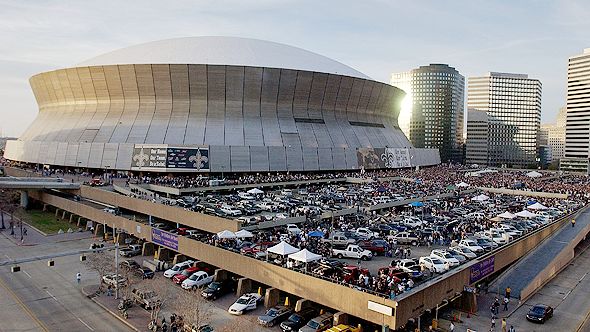
The same was true on the “Katrina” page. To simulate the color of the water coming into New Orleans from the Gulf of Mexico I combined Caribbean Green and Fuzzy Wuzzy Brown...and mixing Macaroni and Cheese and Olive Green captures the exterior of the Superdome so, so, nicely.

None of this would have been possible without those 24 extra colors...and as so often happens, better tools make the telling of history ever more engaging and accurate—enriching our understanding of events in the process.

--I was worried that I would have trouble sharpening my crayon enough to make “Bin Laden Determined To Attack Inside The U.S.” legible...but lucky for me, that page was missing from the preview copy.

--What I’ve seen of the book prompts a quick—and admittedly snarky--question: when Mr. Bush says that he’ll be “working with the assistance of researchers”...isn’t that kind of like OJ Simpson telling reporters that he’s busy “looking for the real killers?”

(I was disappointed, I must admit, that the advance copy did not include the “Orange Jumpsuit” page, either: choosing between Atomic Tangerine, Burnt Orange, Neon Carrot, and Mango Tango had taken nearly an hour and two replays of a Ted Nugent song...and with the page missing all that time was expended, with no tangible result produced.

I had also picked out Burnt Orange, by the way, for the fiber optic cables in the AT&T network switching center in San Francisco, but, again, the regret of a missing page...)

So there we are: for today we have three great stories...and two of them don’t even require you to stay within the lines, which is always nice.

Ayman Nour is out of jail, which may be part of a bigger story, school lunches are no longer punishment in California...and we had a spot of fun with Mr. Bush and his impending book, for which I hope Laura Bush will forgive us.

And as for me?
Time to get online and see if I can order another Macaroni And Cheese to replace the one I used up on the Superdome.

Ah, the troubles of a writer...

Monday, November 17, 2008

On The View From Egypt, Part Three, Or, Could Big Trouble Create A "Biden Challenge" ?

I have been telling a serialized story about Egyptian politics recently, and my friend noemie maxwell, over at the Washblog, left a comment that suggested to me that I had “buried the lead” during the Part One and Part Two conversations.

We’ve been hinting at Joe Biden’s comments about inevitable challenges to the incoming Obama Administration, as well as describing political repression and the Constitutionalization of a “forever” political majority...but what we haven’t been talking about is why all of this, specifically, is important to US interests—and what a problem Big Trouble in Egypt could be for a new Administration.

Today, that’s an oversight we’re going to fix....and as a result, we won’t be resolving the cliffhanger that ended Part Two until Part Four.

So hop in the car, Gentle Reader, because we have a long ride ahead.

Let’s get this conversation started by answering the title question...why does Egypt pose such a significant potential challenge for US foreign policy?

The Middle East and its neighbors, we all know, represent the greatest foreign policy challenge we face today—and Egypt is not only adjacent to everything in the Middle East, they’re the first Arab country to have made a kind of peace with Israel.

The Gaza Strip is one half of what could eventually become Palestine...and it is surrounded on three sides by Israel—and on the other by Egypt.

The Suez Canal is entirely within Egypt. If access to the Canal were impeded, oil shipments from Saudi Arabia, Iran, and Iraq would have to travel entirely around Africa...as well as trade from places such as Indonesia, India, and China heading to the Mediterranean and beyond that, to Northern Europe and the East Coast of North America. The Canal, and the trade it supports, has been so important for so long that the British considered it the “jugular vein” of their Empire—in 1892.

(Here’s a fun fact: it is estimated that 120,000 Egyptian forced laborers died during the construction of the Canal.)

We have an extremely close relationship with Egypt as it relates to our “War on Terror”...and they are very important to our very ugly “rendition” program:

“"If you want a serious interrogation, you send a prisoner to Jordan. If you want them to be tortured, you send them to Syria. If you want someone to disappear-never to see them again-you send them to Egypt."

--Ex-CIA agent Bob Baer, quoted in Stephen Gray's “The New Statesman” article “America’s Gulag”


We send lots of people to be interrogated, tortured, and disappeared all over the world—and lots of them end up in Egypt; delivered by our CIA to their SSI (State Security Investigations). How many exactly? No one is telling—and it’s possible that no one actually knows.

One thing we do know: we have been following our longtime pattern of supporting a “repressive strongman” in Egypt, just as we have in so many other countries—and that often comes back to bite us very hard (see: Iran).

Lazoghli Square.

The name conjures up such happy memories...if you were one of those who were married at the Notary Public’s Office down at the ol’ Ministry of Justice offices located on the Square.

If you were one of those who were tortured to death by SSI, in the very same building...well, those memories aren’t so happy.

And it is those memories that we will have to deal with should President Hosni Mubarak and his National Democratic Party lose their hold on power suddenly—and it is those memories that have the potential to make things very bad for the US, not just for bilateral relations, but for our relations across the Islamic world.

How bad might it get?

You may recall from our last conversation that essentially the only political opposition that is not the Muslim Brotherhood is the Al-Ghad Party...and you may recall from our last conversation that Ayman Nour, Al-Ghad’s 2005 and 2008 Presidential candidate (and the subject of the cliffhanger from the last story), has been in and out of prison lately.

The de facto current leader of the Al-Ghad Party, Wa’el Nawara, offered this assessment of the potential problems ahead in an email I received just last evening:

Egypt is key to the region's stability and development ... the situation is even more critical than Iran ...

If Egypt falls ... the entire Middle East and North Africa fall - from Pakistan to Morocco - into chaos, or into the hands of extremists or back to the extremists or back to the age of one-military-coup-every-six-months.

With the eradication of all moderate opposition and the elimination of any real political process, the political situation in Egypt is so uncertain and fragile to the extent that no one knows what happens when Mubarak leaves. Building a political process and tolerating real secular opposition is an insurance policy for stability which the Egyptian regime has persistently failed to subscribe to.

And therein lies the answer to today’s question.

Two things are required to turn Egypt into a foreign policy challenge for the new Administration: there has to be the potential for great damage to peace and stability if Big Trouble should come...and there should be some indication that Big Trouble might be on the way, sooner rather than later.

If Wa’el Nawara is to be believed, the potential for great damage is definitely there...so now what we need to know is whether Big Trouble might really be on the way, sooner rather than later.

Well, folks, I believe it may be...but that will be the second cliffhanger we will resolve in Part Four of this story.

Since we’re running a bit long, and I’m trying to avoid 4,000 word stories, we’ll end today’s conversation with a final thought from Wa’el Nawara:

I just hope that the new US Administration will be able to develop rapport and in fact build some leverage ... in the relationship with Egypt ... soft leverage ... based on partnership and mutual interests ... such that this leverage can be used to talk the regime into affecting much-needed political reform and democratic transformation. This is the only way to insure long-term stability in Egypt and the Region.

Saturday, November 15, 2008

On The View From Egypt, Part Two, Or, If You Can't Beat 'Em, Lock 'Em  Up  

Joe the Biden famously warned us that the new President will be tested by a foreign policy challenge--and most of us assumed that challenge would come from somewhere like Pakistan, Afghanistan...or Russia.

New developments in the Middle East are suggesting that the challenge might come from an entirely different direction.

It’s quite a story we’ve been telling--and today’s installment involves massive electoral manipulation, intimidation, imprisonment... and a recanting witness who dies in his jail cell.

Hop on board the international train, Gentle Reader, and we’ll see what we can learn about a country that is hardly an enemy...that is, in fact, such an ally that they have been willing to torture for us.

As the title notes, this is Part Two of a larger story, so let’s recap:

The Arab Republic of Egypt has been ruled by various versions of one political party more or less forever. That political party is today known as the National Democratic Party (NDP); and at its head is Egypt’s President (since 1981), Hosni Mubarak.

Egypt’s Constitution is written so as to ensure the perpetual dominance of the NDP. For example, the Government is allowed to license political parties...and may revoke that license if a Party violates the law.

Egypt’s Constitution says that “national unity” is the principle to which politics in the Republic shall adhere, which means any political party that advocates any change in the way the NDP is running things is potentially guilty of a violation of law.

The recap complete, let’s move on to new business.

There are other political groups in Egypt besides the NDP, but the opposition is kept very tightly controlled.

One opposition group that exists, but really doesn’t is Al-Ikhwan Al-Muslimeen (in English, the Muslim Brotherhood).

The group has been officially banned in Egypt, but individuals “unofficially” supporting the Brotherhood have run successfully for Parliament. (In 2005, the unofficial Brotherhood candidates won 20% of Parliamentary seats.)

It is said that Mr. Mubarak allows the presence of the Brotherhood, partly to convince Americans that he and the NDP represent the only option other than Radical Islamism...and partly because his own citizens support elements of the Brotherhood’s platform.

Not unlike other Islamist political organizations, the Brotherhood also provides social services in ways the Government does not, which has also strongly connected the group to Egyptian citizens.

Some report that the Brotherhood is associated with extremists, others report that the Brotherhood has in recent decades chosen a moderate path, seeking to impose Shari’a Law through elections and other political means. It is likely that both statements are, to some degree, correct.

Partly because the Government has tolerated the Brotherhood--and partly because the Brotherhood has become powerful enough to demand it--Islamists have gained authority as de facto cultural rulemakers; which, ironically, has led to the Brotherhood acquiring the very political influence Mr. Mubarak’s Government had hoped to avoid giving away.

In an attempt to reduce that influence, there have been various crackdowns on the group....meaning that from time to time the Mubahath el-Dawla (Egyptian State Security) “rounds up the usual suspects” for a bit of intimidation, beating, and torture...with jail time applied as needed.

Other means are also used: as an example, virtually the entire slate of candidates that hoped to run as “Independent” candidates (but were widely perceived as being associated with the Brotherhood) were disqualified by the Government, with only 20 being allowed to run for the 52,000 positions available in the April 2008 elections. (These were the same candidates that had won 20% of the seats in Parliament, and it was expected that they would also do well in the local elections.)

The Brotherhood, despite the best efforts of the Government, is not the only opposition.

There have been a variety of efforts over the years to mount other “reform” candidacies; and today Egypt’s most successful reformer outside the Brotherhood is Ayman Nour.

Of course, in Egyptian politics, success is relative.

Nour, an attorney by trade, was elected to Parliament, but his first major success came just three months after he formed the El-Ghad (Tomorrow) Party in an effort to put himself in contention for Mr. Mubarak’s job in the 2005 Presidential election...when he was stripped of his Parliamentary immunity, arrested, tossed into prison, and charged with conspiring to forge some of the signatures that were on his nominating petitions.

Additional success came in the form of the Party’s newspaper being banned the day before it was scheduled to hit the newsstands.

In the subsequent trial, monitored by Human Rights Watch, the State was able to present co-defendants who admitted their own culpability in the forging of signatures, and who then named Nour as the group’s ringleader. Nour denied having ever met five of his six alleged co-conspirators.

It was alleged by Nour’s defense that Egyptian State Security had “assisted” the co-defendants with their recollection of events—and in fact, one of the co-defendants, Ayman Isma’il Hassan, recanted his testimony in open court, claiming that he was coerced into his confession.

The State Department offered this comment on December 24, 2005:

The United States is troubled by the Egyptian court decision convicting civil reformer and former presidential candidate Ayman Nour. Mr. Nour's trial has been marred by irregularities and inconsistencies, and has failed to meet the international standards of transparency and respect for rule of law that the Egyptian Government has publicly espoused.

Mr. Nour's detention and sentencing raise serious concerns about the path of political reform and democracy in Egypt, and is inconsistent with the Egyptian Government's professed commitment to increased political openness and dialogue within Egyptian society.

We note reports that Ayman Nour's health appears to be deteriorating, and we urge the Egyptian Government to consider his humanitarian release.

The United States and the international community have been following with concern the Government of Egypt's handling of Ayman Nour's case. We will continue to press for his release.


Nour received a five year sentence and was sent to the Mazra'at Tura Prison.

As it turns out, Hassan, the recanting witness, did not survive the events of the trial and his own five year sentence that followed: it is reported that he was found by his three cellmates hanged in his prison cell when they awoke one morning in September 2007.

I love a good cliffhanger...especially when they are real.

With that in mind, this is where we stop for today—but here’s what you need to know:

Nour’s story, despite the intimidation and imprisonment, is far from over.
The intimidation and imprisonment (courtesy of a Government we strongly support) isn’t over, either.

The next time we meet, there’s a lot more story to tell: the Internet becomes the opposition’s most dangerous weapon, the Government responds with “spontaneous demonstrations” and arson...and we discover that in Mr. Mubarak’s Egypt, bloggers are such a threat to public order that they are now themselves targets for torture.